

Seasonal Tips
Fall and Winter Vegetable Garden Checklist for Mediterranean Climates
October 29, 2026
The first serious rain changes everything. Overnight the dust washes off the leaves, the soil darkens, and the garden seems to breathe again. In Mediterranean climates this is the moment the real growing year begins — not spring. While gardeners further north are draining hoses and stacking pots, you can be sowing, planting and harvesting right through to March. The work is different, though. Less about pushing growth, more about timing, drainage and shelter. What follows is the order I work in from late September into January, adapted for gardens with mild, wet winters and the occasional sharp frost inland.
Clear and Repair Before the Rains Settle In
Do the demolition first, while the ground is still workable. Pull spent tomatoes, peppers, aubergines and cucumbers whole, roots and all, and get them off the plot. Mildewed foliage and blighted stems should not go on the compost heap unless you run a hot system that genuinely heats up; bag them for municipal green waste instead. Beans are the exception: cut the stems at soil level and leave the roots in place to break down.
Then weed properly. Chickweed, oxalis and bittercress are setting seed right now, and every one you leave is a hundred next spring. A half hour with a hoe on a dry morning does more good than a whole afternoon in February.
- Wash and dry stakes, cages and strings; store them under cover so they last.
- Sharpen secateurs and hoes, and oil wooden handles before the damp gets into them.
- Fix raised-bed boards, reset loose paving, clear gutter outlets and drains.
- Walk the beds after the first heavy rain and note where water stands; that is where you add grit or raise the soil line.
Sow in Succession, Not All at Once
Autumn sowing is easy to overdo. A single row of broad beans planted in October will feed you for weeks; three rows will feed the slugs. Sow small and repeat. In mild coastal gardens, broad beans and early peas can go in from late October; further inland, wait until November or start them in modules under cover and plant out when roots fill the pot. Garlic goes in now too — split the bulbs, plant the cloves pointed end up, about 5 cm deep and 15 cm apart, in ground that drains. Buy fresh certified stock rather than replanting supermarket bulbs.
For the rest, direct sowing works well once the soil has cooled:
- Roots: carrots, radish, turnips and beetroot, sown thinly in stone-free ground.
- Leaves: spinach, chard, rocket, lamb's lettuce, winter lettuce and coriander.
- Alliums: onion sets and spring onions for an early start.
Salads are worth sowing in small batches every two to three weeks. Growth slows sharply in December and January, but a mild spell will bring a flush you can pick for months.
Plant Out and Firm In
Brassicas — kale, cabbages, broccoli, calabrese — transplanted in early autumn settle quickly and crop through the winter. Water the module or pot thoroughly an hour before planting, set each plant at the same depth it was growing, and firm the soil around the stem with your knuckles. Loose planting is the main reason winter brassicas rock in the wind and never heart up.
Net everything immediately. Pigeons do far more damage in winter than caterpillars ever do in summer, and a light fleece or mesh cover also takes the edge off cold nights. Space plants generously: crowded winter crops sit wet and rot. Chard, winter lettuce and spring onions planted now will carry you into March with almost no attention.
Protect What You Have
Know your frost pockets. Cold air slides downhill, so the bottom of a slope or the corner behind a wall will catch frost while the rest of the garden escapes. Put tender plants — late peppers, lemons in pots, a bay you are babying — against a south-facing wall, and keep fleece, cloches and old windows within reach for the two or three nights that matter.
- Mulch beds with straw or leaves, but keep the material a hand's width from stems so slugs have less cover.
- Stake anything tall before the first gale, not after.
- Raise pots onto feet so winter rain drains through instead of sitting under them.
- Water new transplants in dry spells; established plants need almost nothing now.
- Set slug traps or go out with a torch after dark. Wet autumn evenings are their season.
Resist the urge to feed. Nitrogen now produces soft growth that the first cold night turns to mush. A thin layer of compost is enough.
Harvest and Store What You Cannot Leave
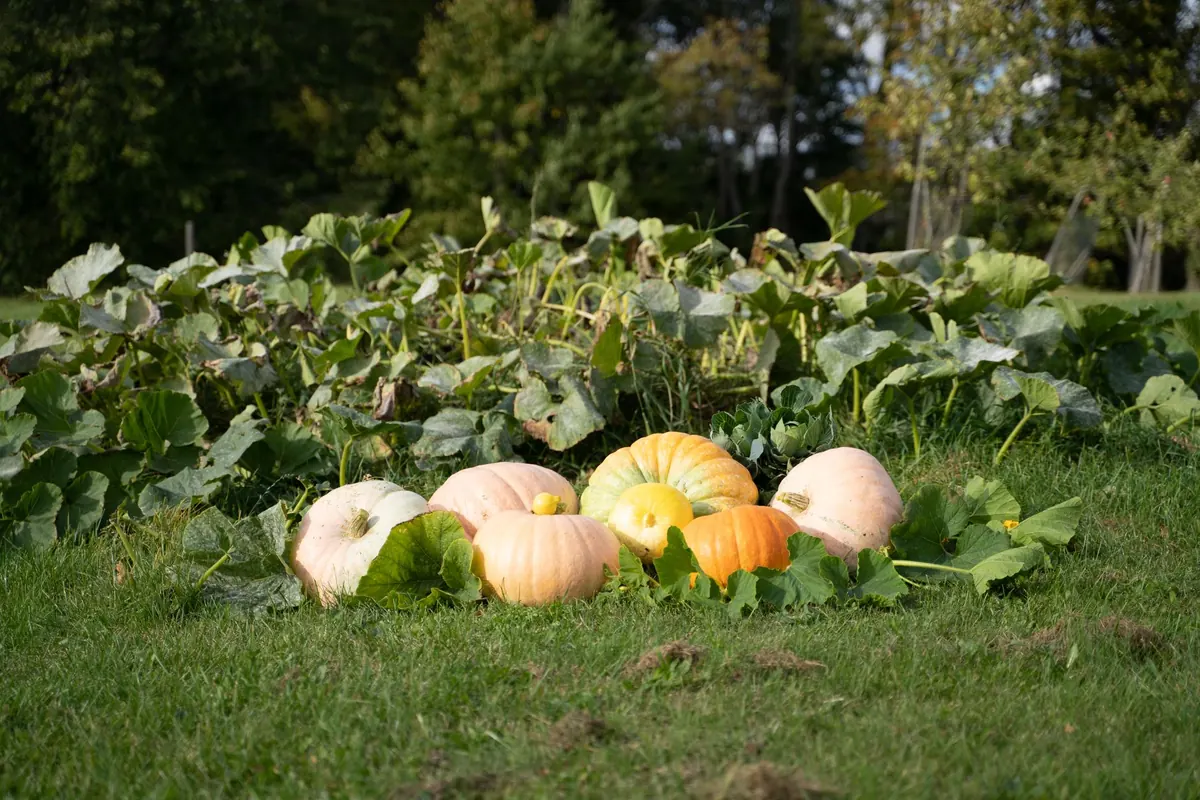
Bring in winter squash and pumpkins before the first hard frost, cure them somewhere dry and airy for a week or two, then store them cool and dark, checking weekly for soft spots. Green tomatoes will ripen on a tray indoors; the smallest ones make better chutney than salad. Root vegetables can stay in the ground under a thick straw mulch and be lifted as needed, which is far easier than storing them in a shed.
Onions and garlic need to be thoroughly dry before storage, and any bulb with a thick neck or a soft base should be eaten first. Check your stored crops every week or so — one rotting squash can take the whole box with it.
Plan Spring While the Soil Rests
This is the quiet work that pays off in April. Sketch the beds as they are now, note what did well and what sulked, and mark where each family grew so you can rotate next season: brassicas away from last year's spot, legumes into the ground the brassicas leave behind.
Bare beds do not have to stay bare. Sow a green manure — field beans or vetch where you want nitrogen, mustard or calendula where you simply want cover — and dig it in a few weeks before spring planting. Order seeds now while varieties are still in stock, clean and air the greenhouse, and turn the compost heap once so it keeps working through the winter. Ten minutes with a notebook on a rainy afternoon saves a lot of guessing in March.
If You Only Do Five Things
Clear diseased summer crops and get them off the plot. Plant garlic and broad beans. Net the brassicas. Keep fleece handy for frosty nights. Write down what worked. Everything else on this list can wait a fortnight without harm, and a garden that is tidy, drained and shelter-ready in November will reward you long before the first asparagus shows.
Photo: Vilnis Husko / Pexels
Related posts
More stories you’ll love reading