
Herbs
Basil, Mint, and Rosemary: Watering and Pruning Rules That Keep Herbs Productive
October 26, 2026
Three pots on a sunny patio. Same soil, same sun, same gardener with a watering can. By mid-July the basil is bolting, the mint is a tangle of woody stems and the rosemary has gone brown from the base up. None of them is dying of neglect — they are reacting to care that suits one habit and ruins another.
Basil, mint and rosemary are three of the easiest herbs to grow and three of the easiest to mismanage, because they come from very different places. Treat them as individuals and you get fuller plants, cleaner flavour and a cutting season that runs from June to the first cold nights. The rules below are the ones that matter.
Start With the Roots: A Different Water Habit for Each Herb
Forget the calendar. A watering schedule is a guess, and guesses drown more herbs than drought does. Read the plant and the soil instead — and remember that these three have almost nothing in common below ground.
Basil
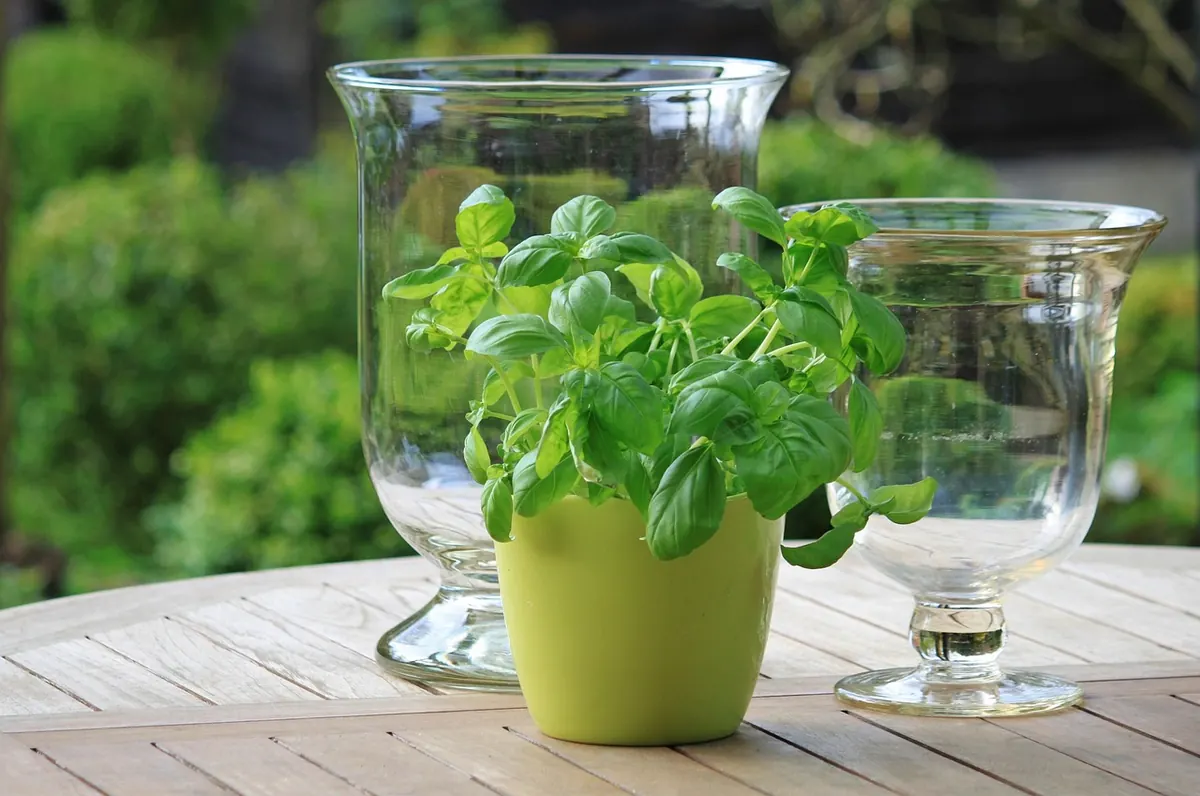
Basil is a shallow-rooted annual that grows fast and drinks fast. In a pot it can go from perky to limp in a single hot afternoon, and that midday droop is not always a sign of disaster — check again in the evening before you flood it. Water when the top two or three centimetres of compost feel dry. Aim the water at the soil, not the leaves, and water in the morning so any splashed foliage dries before night. A pot standing in a saucer of water is the fastest way to lose a basil plant to root rot.
Mint
Mint is the thirstiest of the three and the least forgiving of a dry pot, but its real problem is drainage. It likes soil that stays reliably moist and still lets water through. That contradiction is easy to solve in a container with a decent hole in the bottom; it is harder in heavy garden soil. Grow it in a pot for another reason too — mint spreads by underground runners and will happily take over a border.
Rosemary
Rosemary comes from dry, stony Mediterranean hillsides and behaves accordingly. Its needle-like leaves lose very little water, and its roots hate sitting wet. Water it deeply, then let it dry out considerably before watering again. An established rosemary in open ground usually needs nothing from you beyond rainfall. In a pot, water when the top third of the compost is dry. Yellowing needles and a bare centre are more often caused by soggy roots than by thirst, and winter wet kills more rosemary than frost.
How to Water Without Guessing
Three habits make watering far more accurate, whatever the herb.
- Use your finger. Push it in up to the second knuckle. If it comes out damp with soil clinging to it, wait. If it is dry and cool, water.
- Weigh the pot. Lift it before and after watering once or twice and you will learn its dry weight quickly. It is faster than digging around.
- Water thoroughly, then stop. A little every day keeps roots shallow and salts near the surface. A good soak followed by a genuine dry spell builds deeper roots.
Terracotta dries faster than plastic, small pots dry faster than large ones, and a windy balcony dries everything. Mulching with a centimetre or two of compost slows evaporation and keeps basil roots cool. Water in the morning when you can; evening watering leaves foliage damp overnight, which is exactly what fungal problems want.
Why Cutting Herbs Back Makes Them Grow More
A herb left alone grows upward and outward from the tip. That tip bud suppresses the buds below it, so you get one long stem instead of a branched plant. Snip the tip off and the buds just below wake up, each one pushing out a new shoot. Every good pruning habit is just this principle applied at the right moment.
The second rule is about flowers. Once basil, mint or rosemary puts energy into flowering, leaf production slows and the flavour of basil and mint changes noticeably — basil turns bitter and mint gets tougher. Pinching out flower buds keeps the plant in leaf mode for weeks longer. Let a few flowers through at the end of the season if you like; bees appreciate them.
Pruning Basil: Pinch Above a Pair of Leaves
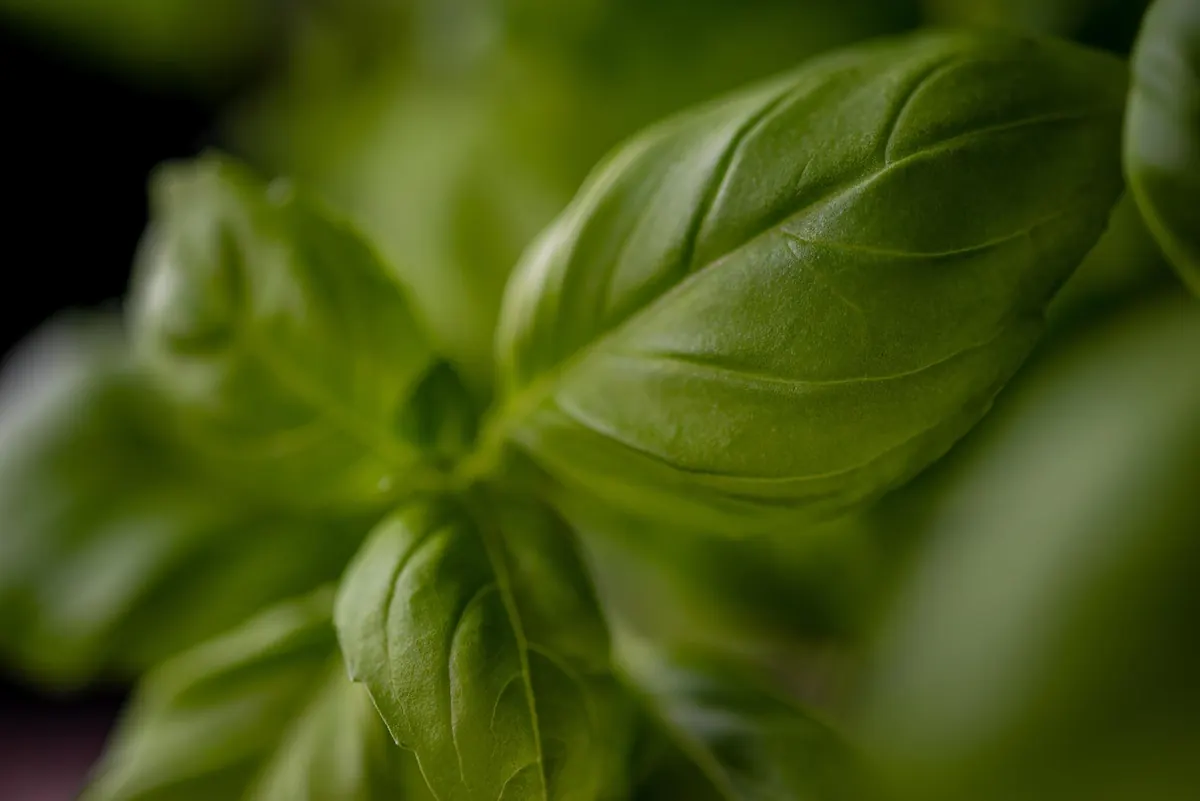
Find a pair of leaves with a growing tip above them, and pinch or snip just above that pair. Two new shoots will emerge from the leaf joints, so one cut becomes two stems. That is how a skinny supermarket plant becomes a bushy one.
Start early. When a young plant has three or four pairs of leaves, pinch out the top pair. After that, harvest from the top down, always cutting back to a leaf pair rather than snipping randomly. Remove flower buds the day you see them — check every two or three days in hot weather, because basil can go from tight buds to full flower in about a week.
Take no more than about a third of the plant's foliage at once. A hard cut back to bare stems will usually regrow, but it sets the plant back by weeks. If a stem does get woody and tough, cut it low and let the plant redirect energy into fresh shoots.
With basil, the question is never "should I cut this?" but "where is the nearest pair of leaves?"
Pruning Mint: Cut Hard, Cut Often
Mint is the one herb you can be blunt with. Left to its own devices it forms long, leafless, woody stems with a small tuft of leaves at the top. The fix is a confident haircut: when stems get leggy, cut the whole plant back to about five to eight centimetres above the soil. It will come back dense and tender within a couple of weeks, and you can do this two or three times in a season.
For everyday use, harvest whole stems rather than picking individual leaves. Cut just above a leaf pair, exactly as with basil, and work around the plant so it stays balanced. Mint in a pot benefits from being divided and repotted with fresh compost each spring, because it exhausts the soil and packs the pot with runners. If you grow it in the ground, keep pulling the runners that stray beyond the clump.
Pruning Rosemary: Trim Little and Often
Rosemary is the opposite of mint. You cannot cut it back hard and expect it to bounce back, because old, bare, woody stems rarely produce new growth. Everything happens at the tips, in the green growth, and that is where your secateurs should stay.
Trim lightly after flowering in spring, and again through summer whenever a shoot gets straggly. Keep each cut within green, leafy stem — if you leave nothing but bare wood on a branch, nothing will grow back there. For a bushier plant, pinch the soft tips of young growth with your fingers; the plant responds by branching. Harvest by taking the top few centimetres of stems, which counts as pruning anyway.
If an old rosemary has gone bare and woody down low, don't try to renovate it with a hard cut. Keep it lightly trimmed, take cuttings from the healthy tips, and start a new plant — it is more reliable than hoping for regrowth from old wood.
A Weekly Routine That Keeps All Three Productive
You don't need much equipment, just a habit of looking properly. Ten minutes a week, done consistently, is worth more than an occasional heroic session.
- Check with a finger before watering anything, and water in the morning if you can.
- Pinch basil tips and flower buds whenever you walk past. Take a few leaves for the kitchen as you go.
- Cut mint stems back to a leaf pair, and give the plant a full haircut once it starts to look tired.
- Run your thumb and finger down each rosemary shoot and pinch the soft tip. That is the whole job.
- Lift every pot once a week to check drainage holes are clear and no saucer is holding water.
Do this and the three herbs stop competing for the same care and start doing what each does best: basil throwing out new leaves until the nights cool, mint staying soft and generous, rosemary slowly thickening into a proper bush. The plants will tell you what they need — you just have to look before you pour.
Photo: ka_re / Pixabay
Related posts
More stories you’ll love reading